

Applied Mathematics In Hydrogeology Pdf
- Course details
- Entry Requirements
- Teaching and assessment
- Employability
The Birmingham Hydrogeology MSc is the longest-running groundwater MSc course in the UK. Our alumni comprise a large proportion of the groundwater professionals in the UK and many more in another 50 or so countries, all contributing significantly to both human and environmental well-being.
Our course provides students with a comprehensive education in the fundamentals of groundwater science and engineering, together with considerable industry involvement, thus equipping graduates with the skills to tackle any groundwater problem they may be faced with, anywhere in the world.
Why is hydrogeology important?
Hydrogeology is the study of groundwater. Groundwater represents by far the largest volume of freshwater on Earth at any one point in time. It plays a vital role in the environment, provides a major – often the only - water resource for a significant proportion of the world's population, and often is the dominant factor in determining rock and soil engineering strength. Hence, groundwater is an essential component for national infrastructure globally. All major civil engineering and environmental projects require the input of hydrogeologists. It is also becoming increasingly important in the context of geoenergy. This vital resource requires management and protection, not least from over-abstraction, contamination, and emerging problems including climate change. Employment is available in the UK and overseas, often with consultants, governments and regulators, and research organisations. Jobs are varied and challenging.
Why join our Course?
The Course was established in the early 1970s by Professor John Lloyd. Having now been running for about 50 years, it is the longest-running groundwater MSc course in the UK, and possibly internationally.
Professor John Tellam talks about MSc Hydrogeology course
As a result, its alumni comprise a large proportion of the groundwater professionals in the UK, and the Course has supplied professionals to more than 50 countries. It has, therefore, a very close and mutually beneficial relationship with industry, with over 40 external organisations (consultancies, regulators, research institutes, universities, and water companies) being involved each year through projects, guest lectures, seminars, mini-courses, fieldwork, prizes and scholarships, provision of software, and careers education.
Over its 50 year history, the Course has changed considerably, keeping in step with latest research and technological advancement in the subject. The Course syllabus is periodically reviewed by a panel of experts from industry to ensure that it provides the skillsets required by industry and academia.
The employment record for the Course is excellent. Demand for hydrogeologists is substantial and students from the Course are highly regarded by employers. It also provides an excellent foundation for research, and a significant proportion of graduates go on to take PhD studies.
There are also course-specific scholarships and pre-course opportunities (please see Fees section below).

The small class size means we get a lot of opportunities to ask questions and be well looked after regarding focused learning and extra teaching. Also, I really appreciate the variation in types of learning. It's hard to get bored when your classes are cycling from inorganic chemistry to deriving equations to hydrological processes.
Corine Oggel, MSc Hydrogeology alumna
Why study this course?
The aims of our Hydrogeology MSc Course are to provide students with
- a comprehensive education in the fundamentals of groundwater science and engineering
- considerable practical experience
such that, on graduation, they are able to tackle any groundwater problem that they may be faced with, no matter what the context - water resources, eco-environment, contamination, engineering, waste disposal, or geoenergy – or geographical location.
Who will you study with?
The optimal number of students is around 25. This allows sufficient time to be spent by staff on individual students, but still gaining the important interactions arising from larger groups of diverse backgrounds, including different subjects, countries and therefore legislative systems, and professional experiences. Overseas students comprise 20-50% of the group, and originate in all parts of the world. Though, as with any one-year MSc course, the work is intensive, the group spirit is invariably inclusive and supportive, and we encourage students to learn from each other as well as from the staff and external speakers.
Most students will have little or no experience in groundwater employment, but some will have been working for a range of different types of employer. For students without working experience, we help them transition into professional careers. For those with experience, we help them advance their technical and other professional capabilities, and in particular broaden their capabilities into areas that they may not have encountered in their previous employment.
Course Timing, Length, and Basic Structure
The Course (180 credits) runs from late September to the end of August. The Taught Modulesof the Course are split into two terms: Autumn (September to December) and Spring (January to March). During this period (September to March), the subject is developed through 120 credits of taught modules comprising lectures and practical sessions interspersed with Activities such as fieldwork, a seminar series and at least one visit to a national hydrogeological meeting. The remaining 60 credits of the Course are provided by the individual Project undertaken between mid-May and the end of August.
There is a part-time option, the 'split registration' option, whereby students undertake the degree over two consecutive years. In the first year, they take the first term taught modules on a full-time basis, and in the second year they take the second term modules, again on a full-time basis. The project is taken over both years, being submitted by the end of August in the second year.
Deciding on Your Next Steps
If, after looking through this website, you would like to know more, the University organises postgraduate Open Days. If you would like to visit the University at other times, or simply talk to or email someone to discuss your possible application, or find out details about the COVID-19 plan for the 2020/21 academic year, please contact the Course Leader, Professor John Tellam (j.h.tellam@bham.ac.uk). If you would like to gain some work experience, please also contact John Tellam: sometimes opportunities exist, though usually only for applicants that have accepted offers for a place on the Course.
Coronavirus (COVID-19) latest updates and FAQs for future students and offer-holders
Visit our FAQs
Modules
Taught Modules
The Course modules are reviewed regularly to ensure they are up-to-date and informed by the latest research, and, by means of a panel of external specialists, satisfy the requirements of industry and academia. The modules contain what the industry panel view to be necessary coverage for groundwater professionals. There are thus no optional modules, though specialisation is possible when undertaking the project.
Almost all modules have practical classes integrated into the teaching sessions. These are problem-solving sessions, usually often involving calculations, and are supervised by lecturers, in some cases supported by demonstrators.
Groundwater Hydraulics (20 credits) [Autumn Term]
Aims: To develop a working understanding of
- the physical processes controlling groundwater movement and solute transport
- the mathematical models used to describe these processes
- the laboratory and field hydraulic tests available to characterise the subsurface hydraulically.
Delivery: The module combines lectures, practicals, computer, fieldwork, and laboratory work.
Assessment: By examination
Quantitative Analysis of Hydrological Processes (20 credits) [Autumn Term]
Aims: To develop
- an understanding of the physical processes occurring at the ground surface boundary of groundwater systems
- an understanding of biogeochemical cycles and ecohydrological processes at interfaces between surface water and groundwater
- essential GIS knowledge and skills for groundwater and surface water investigations
Delivery: Through lectures and practicals.
Assessment: By report and in-class test
Borehole Design, Construction and Maintenance (10 credits) [Autumn Term]
Aim: To develop a working understanding of the theory and practice of the design, construction and maintenance of boreholes, including pump choice and borehole geophysics.
Delivery: Through lectures and practical sessions, two thirds of which are taught by an external, industry-based lecturer.
Assessment: By examination
Inorganic Chemistry and Groundwater (10credits) [Autumn Term]
Aim: To develop a working understanding of aqueous inorganic chemistry appropriate to facilitate interpretation of groundwater chemistry data sets to solve problems relating to regional groundwater flow, groundwater contamination, and well design.
Delivery: Through lectures and practical and computer modelling sessions, with some fieldwork.
Assessment: By examination
Groundwater Organic Contaminant Pollution and Remediation (20 credits) [Spring Term]
Aim: To develop a working understanding of
- contaminant sources; toxicology, environmental standards, and example legislative drivers
- organic compound behaviour (phase partitioning, reaction) in the subsurface and how it can be evaluated quantitatively
- groundwater contaminant risk assessment and remediation scheme design, including monitoring design.
Delivery: Through lectures and practical sessions, with fieldwork. A significant contribution on practice is provided by industry remediation and groundwater monitoring specialists.
Assessment: By an independent report of the analysis of a particular contamination scenario.
Groundwater Flow Modelling (10 credits) [Spring Term]
Aims:
- to develop a working understanding of groundwater flow modelling
- to refine skills in conceptualising groundwater systems from limited data
- to gain practice in use of professional groundwater flow modelling software
- to produce technical reports of professional standard.
Delivery: All lectures and practicals are held in a specialised teaching computer cluster. A combination of group work and individual work, small group tutorials and online support are provided to aid the development of skills. The software is supplied free to the students for the year by Stantec.
Assessment: By coursework - the development and calibration of a groundwater flow model.
Contaminant Transport Modelling (10 credits) [Spring Term]
Aims:
- to develop a working understanding of contaminant transport modelling
- to gain practice in use of professional solute transport groundwater modelling software
- to produce modelling reports of professional standard.
Delivery: Similar to the Groundwater Flow Modelling Module including lectures, practicals, group work, individual work, tutorials and online support.
Assessment: By coursework - the development, calibration, and application of a solute transport model.
Further Topics (10 credits) [Spring Term]
Aim: To develop an understanding of important, more advanced aspects of groundwater science and engineering, including: further unsaturated zone flow theory and practice; further exploration of recharge estimation; variable density flow theory and practice; and fracture flow theory and practice.
Delivery: By lectures and practical exercises.
Assessment: By coursework.
Water Resources Studies (10 credits) [Spring Term]
Aims:
- to develop an understanding of how hydrogeological assessments are structured
- to develop ability in hydrogeological interpretation and water resources assessment for different geological settings, climates, and socio-economic requirements
- to develop an understanding of how the various aspects of hydrogeological investigation are integrated
- to provide an introduction to the hydrogeological research and industry community
- to enhance technical writing and presentation skills.
Delivery: Tutorials and a visit to a national groundwater scientific conference.
Assessment: Students work in teams to produce a report on particular hydrogeological environments, and present their findings to their colleagues in a day of talks.
Fees
Fees for 2022/23
- UK students £9,810 FT
- International students £25,740 FT only
Learn more about fees and funding
Are you an international applicant?
All international applicants to this course will be required to pay a non-refundable deposit of £2,000 on receipt of an offer, to secure their place.
Find out more about the deposit >>.
Temporary employment opportunity
Hafren Water are pleased to offer temporary employment to students who have a secured place on the MSc Hydrogeology course in September. The role is open to those with a first degree in geology, or a closely allied subject. The work would involve supporting senior staff in a wide range of projects, which may include data collation and assessment, preparation of drawings using GIS and fieldwork. This opportunity would provide excellent grounding in the subject prior to commencing MSc studies.
Please submit a CV and covering letter to info@hafrenwater.com for consideration.
Scholarships and bursaries
Course-Specific Scholarships
Water Conservation Trust Scholarships
The Water Conservators, a London livery company, have offered a scholarship against fees for many years, and this is usually split between a small number of applicants. In addition, the Water Conservators offer a project support scholarship and a project prize. To apply, please download the application form. The deadline for submission of the completed forms to John Tellam (j.h.tellam@bham.ac.uk) is Monday 6th September, 2021. Any questions, please contact John.
BHS, JBA Trust and the Environment Agency - Hydrology Studentship
There is usually a small number of Hydrology studentships from BHS, JBA Trust and the Environment Agency available, and applications will be advertised at some stage. Awards are anticipated to be between £1,500 and £2,500 depending on the number and quality of applicants. Details for last academic year are located on the BHS-JBA Trust website.
SRK Consulting Scholarship
A competitive scholarship of up to a maximum of £1,500 is being offered by SRK Consulting (UK) Ltd. Please refer to this advertisement for entry requirements and how to apply. The closing date for applications to this scholarship is 30 July 2021.
The Geospatial Scholarship Fund supports both undergraduate and postgraduate study of geography and geoscience. They are offering a Masters Award of £20,000 (full time 1 year masters) to study within the disciplines of geography or geoscience. Applications open on 15 January 2021 and close on 7 April 2021. Awards will be announced at the Esri UK Annual Conference in May 2021. Please see their website for entry criteria.
Non-Course-Specific Scholarships
Our database contains details of postgraduate taught and research scholarship and funding opportunities available to support your studies at the University of Birmingham. Find out more.
International Students
International students can often gain funding through overseas scholarships, Commonwealth scholarships or their home government.
Further Information
For further information contact the Course Lead, Professor John Tellam (j.h.tellam@bham.ac.uk) or get in touch with the Funding, Graduation & Awards via the online enquiries system.
How To Apply
International students requiring visas
Friday 1 July 2022 is the application deadline for international students who require a visa to study in the United Kingdom. We are not able to consider applications for 2021 made after this date; a new application will need to be made for September 2022.
UK students
Wednesday 31 August 2022 is the application deadline for UK students. We are not able to consider applications for 2022 made after this date; a new application will need to be made for September 2023.
Applications for 2022 entry are now open.
Making your application
伯明翰大学水文地质硕士专业中文宣传页文档下载 (For Chinese applicants, an additional leaflet in Chinese is available for download)
When clicking on the Apply Now button you will be directed to an application specifically designed for the programme you wish to apply for where you will create an account with the University application system and submit your application and supporting documents online. Further information regarding how to apply online can be found on the How to apply pages
Apply now
Our Standard Requirements
Qualifications
A 2:1 Honours degree in a relevant subject is normally required, but we will consider alternative qualifications and experience.
Hydrogeology encompasses a broad range of subject matter, from geology, through hydraulics, to aqueous and non-aqueous chemistry. As a result, practicing hydrogeologists have a wide range of backgrounds, and hence we welcome applicants with a wide range of first degree subjects, including geosciences (e.g. Earth Sciences, Geology, Geophysics, Geography, Environmental Sciences, Hydrogeology, Hydrology, Water Resources, and Mining), Engineering (e.g. Civil Engineering, Hydraulic Engineering, Environmental Engineering, Groundwater Engineering, Agricultural Engineering, and Chemical Engineering), and other sciences (e.g. Physics, Mathematics, Computer Sciences, Chemistry, Biochemistry, and Biosciences).
Mathematics
An upper school training in mathematics (e.g., for the UK, AS, A-level, or Scottish Higher in Mathematics) or an equivalent in your degree course covering basic calculus is more than sufficient. However, if, like a significant minority of our students, you do not have such qualifications, we can send you details for undertaking appropriate pre-course mathematics tuition, and you can participate in our revision sessions on mathematics. The mathematics level we, and the profession, require is not high, but is important to meet: if you have any questions, or would like a copy of the topics that you need to have some familiarity with, please contact the Course Leader, Professor John Tellam (j.h.tellam@bham.ac.uk).
Learn more about entry requirements
International Requirements
Holders of a Licence, Diplome, Diplome d'Etudes Superieures, Diplome d'Ingenieur or a Diplome d'Architecte from a recognised university in Algeria will be considered for postgraduate study. Holders of one of these qualifications will normally be expected to have achieved a score of 15/20 for 2:1 equivalency or 13/20 for 2:2 equivalency.
Holders of the Licenciado or an equivalent professional title from a recognised Argentinian university, with a promedio of at least 7.5, may be considered for entry to a postgraduate degree programme. Applicants for PhD degrees will normally have a Maestria or equivalent
A Bachelors (Honours) degree from an accredited Australian higher education institution may be considered for admission to a Masters degree. Applicants with 3 year Bachelors with distinction from a recognised university, can be considered for admission to a Masters degree.
Holders of a Diplom, a Diplomstudium/Magister or a three-year Bachelors degree from a recognised university with a minimum overall grade of 2.5 for 2:1 equivalency or 3.0 for 2:2 equivalency, or a high-scoring Fachhochschuldiplom (FH) from a recognised Austrian Fachhochschule, will be considered for entry to taught postgraduate programmes.
Students with a good 5-year Specialist Diploma or 4-year Bachelor degree from a recognised higher education institution in Azerbaijan, with a minimum GPA of 4/5 or 80% will be considered for entry to postgraduate taught programmes at the University of Birmingham.
For postgraduate research programmes applicants should have a good 5-year Specialist Diploma (completed after 1991), with a minimum grade point average of 4/5 or 80%, from a recognised higher education institution or a Masters or "Magistr Diplomu" or "Kandidat Nauk" from a recognised higher education institution in Azerbaijan.
Holders of a bachelors degree of four years duration from a recognised university in Bahrain will be considered for postgraduate study. Holders of bachelors degree will normally be expected to have achieved a GPA of 3.0/4, 3.75/5 or 75% for 2:1 equivalency or 2.8/4, 3.5/5 or 70% for 2:2 equivalency.
The University will consider students who have successfully completed a Bachelors (Honours) degree of at least three years duration, followed by a Masters degree of one or two years duration. Degrees must be from a recognised institution in Bangladesh.
Students with a good (65%+) 4 year bachelor degree from a recognised institution may also be considered for postgraduate entry.
Students who hold a Masters degree from the University of Botswana with a minimum GPA of 3.0/4.0 or 3.5/5.0 (70%/B/'very good') will be considered for Postgraduate Diplomas and Masters degrees.
Please note 4-year bachelor degrees from the University of Botswana are considered equivalent to a Diploma of Higher Education. 5-year bachelor degrees from the University of Botswana are considered equivalent to a British Bachelor (Ordinary) degree.
Students who have completed a Masters degree from a recognised institution will be considered for PhD study.
A Licenciatura or Bacharelado degree from a recognised Brazilian university:
- A grade of 7.5/10 for entry to programmes with a 2:1 requirement
- A grade of 6.5/10for entry to programmes with a 2:2 requirement
Holders of a good Bachelors degree with honours (4 to 6 years) from a recognised university with a upper second class grade or higher will be considered for entry to taught postgraduate programmes.
Holders of a good Masters degree from a recognised university will be considered for entry to postgraduate research programmes.
Holders of a good Diploma za Zavarsheno Visshe Obrazovanie ('Diploma of Completed Higher Education'), a pre-2001 Masters degree or a post-2001 Bachelors degree from a recognised university with a minimum overall grade of 5 out of 6, mnogo dobur/'very good' for 2:1 equivalence; or 4 out of 6, dobur/'good' for 2:2 equivalence; will be considered for entry to taught postgraduate programmes.
Students with a minimum average of 14 out of 20 (or 70%) on a 4-year Licence, Bachelor degree or Diplôme d'Etudes Superieures de Commerce (DESC) or Diplôme d'Ingénieur or a Maîtrise will be considered for Postgraduate Diplomas and Masters degrees.
Students who have completed a Masters degree from a recognised institution will be considered for PhD study.
Holders of a bachelor degree with honours from a recognised Canadian university may be considered for entry to a postgraduate degree programme. A GPA of 3.0/4, 7.0/9 or 75% is usually equivalent to a UK 2.1.
Holders of the Licenciado or equivalent Professional Title from a recognised Chilean university will be considered for Postgraduate Diplomas and Masters degrees. Applicants for PhD study will preferably hold a Magister degree or equivalent.
Students with a bachelor degree (4 years minimum) may be considered for entry to a postgraduate degree programme. However please note that we will only consider students who meet the entry guidance below.
- Please refer to the guidance below if you are applying for a postgraduate course at the Business School (excluding MBA), or the School of Computer Science.
- Please refer to the 'All other programmes' guidance below if you are applying for all other courses.
ENTRY REQUIREMENTS TO THE BUSINESS SCHOOL (EXCLUDING MBA) AND THE SCHOOL OF COMPUTER SCIENCE
GROUP 1 UNIVERSITIES
- University is ranked in the top 100 in Netbig ranking 2012 or 2013, or in the Shanghai Ranking Best Chinese Universities Ranking 2020 (full table) or 2021 (full table). We will also consider 211 and 985 universities.
- We will consider students from these institutions with 80% or above.
GROUP 2 UNIVERSITIES
- University is ranked in the top 101 to 150 in Netbig ranking 2012 or 2013, or in the Shanghai Ranking Best Chinese Universities Ranking 2020 (full table) or 2021 (full table)
We will also consider the following 4 specialist Business universities:
1. Beijing Technology and Business University
2. Nanjing University of Finance and Economics
3. Tianjin University of Finance and Economics
4. Nanjing Audit University
- We will consider students from these institutions with 85%.
Borderline cases: We may consider students with 76%-79% from group 1, or 80%-84% from group 2 only on a case by case basis if you have a relevant degree and very excellent grades in relevant subjects and/or relevant work experience.
All other institutions: If you do not meet the requirement for group 1 or 2 university above then you are not likely to be considered for entry to the above schools and departments. However, you may be considered for other programmes. Please see the details below.
ENTRY REQUIREMENTS TO ALL OTHER PROGRAMMES (INCLUDING MBA)
GROUP 1 UNIVERSITIES
- University is ranked in the top 200 in Netbig ranking 2012 or 2013, or in the Shanghai Ranking Best Chinese Universities Ranking 2020 (full table) or 2021 (full table). We will also consider 211 and 985 universities.
- We will consider students from these institutions with 80% or above.
GROUP 2 UNIVERSITIES
- University is ranked in the top 201 to 500 in Netbig ranking 2012 or 2013, or in the Shanghai Ranking Best Chinese Universities Ranking 2020 (full table) or 2021 (full table).
- We will consider students from these institutions with 85%.
GROUP 3 UNIVERSITIES
- University is ranked in the top 501 to 800 in Netbig ranking 2012 or 2013, or in the Shanghai Ranking Best Chinese Universities Ranking 2020 (full table) or 2021 (full table)
- We will consider students from these institutions only on a case by case basis with minimum 85% if you have a relevant degree and very excellent grades in relevant subjects and/or relevant work experience.
Borderline cases: We may consider students with 76%-79% from group 1, or 80%-84% from group 2 only on a case by case basis if you have a relevant degree and very excellent grades in relevant subjects and/or relevant work experience.
Please note:
1) MA Education (including all pathways) programmes are only considering applications from Group 1 universities. Applicants from group 2 universities are considered with 3-year full time working experience in education.
2) Masters in Public Administration (MPA, including all pathways) are only considering applications from Group 1 and Group 2 universities.
All other institutions: If you do not meet the requirement for group 1, 2 or 3 university above then you are not likely to be considered for entry to our courses.
Students with Master's degree may be considered for PhD study.
研究生入学要求
学生需要具备学士学位(4年制)才能申请研究生。请注意我们只考虑满足以下入学指导的中国申请人。
- 如果您申请的是商学院(不包含MBA),计算机学院,请关注以下指导。
- 如果您申请的是其它的专业,请关注以下'所有其它专业'的指导。
商学院(不包括 MBA ),计算机学院入学要求
一类中国大学
- 网大(2012或2013),或软科中国大学排名2020(总榜)或 软科中国大学排名2021(总榜)排名前100的大学,以及211和985院校。
- 来自一类大学的申请人均分要达到80%分或以上
二类大学
- 网大(2012或2013),或软科中国大学排名2020(总榜)或 软科中国大学排名2021(总榜)排名前101-150的大学。
- 同时也包括以下4所中国大学
1. Beijing Technology and Business University (北京工商大学)
2. Nanjing University of Finance and Economics (南京财经大学)
3. Tianjin University of Finance and Economics (天津财经大学)
4. Nanjing Audit University (南京审计大学)
- 来自二类大学的申请人均分要达到85%分以上
请注意:来自一类大学的申请人如果均分在76%到79%之间,来自二类大学的申请人如果均分在80%到84%分之间,但具有出色学术背景及优异的专业成绩,以及(或)相关的工作经验,将有可能单独酌情考虑。
所有其它大学 --- 如果您不属于以上一类或二类大学,那么您的申请可能不被以上学院考虑。但是您可以申请其它的硕士课程,请参考以下说明。
所有其它专业的入学要求 ( 包括 MBA)
一类大学
- 网大(2012或2013),或软科中国大学排名2020(总榜)或 软科中国大学排名2021(总榜),以及211和985院校。
- 来自一类大学的申请人均分要达到80%或以上
二类大学
- 网大(2012或2013),或软科中国大学排名2020(总榜)或 软科中国大学排名2021(总榜)排名前201到500的大学。
- 来自二类大学的申请人均分要达到85%或以上
三类大学
- 网大(2012或2013),或软科中国大学排名2020(总榜)或 软科中国大学排名2021(总榜)排名501到800的大学。
- 来自三类大学的申请人均分要达到最低85%,并同时具有出色学术背景及优异的专业成绩,以及(或)相关的工作经验,将酌情考虑。
请注意:
1)来自一类大学的申请人如果均分在76%到79%之间,来自二类大学的申请人如果均分在80%到84%分之间,但具有出色学术背景及优异的专业成绩,以及(或)相关的工作经验,将有可能单独酌情考虑。
2) MA Education (including all pathways) 将只接受来自一类大学的申请人。来自二类大学的申请人必须具有教育领域三年全职工作经验。
3) Masters in Public Administration (MPA, including all pathways) 将只接受来自一类和二类大学的申请人。
所有其它大学 = 如果您不属于以上几种类型的学历,那么您的申请可能不被我们的专业课程考虑。
具有硕士学位的学生可以考虑申请博士学位的课程。
Holders of the Licenciado/Professional Title from a recognised Colombian university will be considered for our Postgraduate Diploma and Masters degrees. Applicants for PhD degrees will normally have a Maestria or equivalent.
Holders of a good bachelor degree with honours (4 to 6 years) from a recognised university with a upper second class grade or higher will be considered for entry to taught postgraduate programmes.
Holders of a good Masters degree from a recognised university will be considered for entry to postgraduate research programmes.
Holders of a good Diploma Visoko Obrazovanje (Advanced Diploma of Education) or Bacclaureus (Bachelors) from a recognised Croatian higher Education institution with a minimum overall grade of 4.0 out of 5.0, vrlo dobar 'very good', for 2:1 equivalence or 3.0 out of 5.0, dobar 'good', for 2:2 equivalence, will be considered for entry to taught postgraduate programmes.
Holders of a good Bacclaureus (Bachelors) from a recognised Croatian Higher Education institution with a minimum overall grade of 4.0 out of 5.0, vrlo dobar 'very good', or a Masters degree, will be considered for entry to postgraduate research programmes.
Holders of a Bachelors degree(from the University of the West Indies or the University of Technology) may be considered for entry to a postgraduate degree programme. A Class II Upper Division degree is usually equivalent to a UK 2.1. For further details on particular institutions please refer to the list below.
Applicants for PhD level study will preferably hold a Masters degree or Mphil from the University of the West Indies.
Students who have completed a Masters degree from a recognised institution will be considered for PhD study.
Holders of a good four-year government-accredited Bachelors degree from a recognised Higher Education college with a minimum overall grade of 3 out of 4 for 2:1 equivalency, or 2.75 out of 4 for 2:2 equivalency; or a good four-year Bachelors degree (Ptychio) from a recognised University, with a minimum overall grade of 6.5 out of 10 for 2:1 equivalency, or 5.5 for 2:2 equivalency; will be considered for entry to taught postgraduate programmes.
Holders of a good Bakalár, or a good pre-2002 Magistr, from a recognised Czech Higher Education institution with a minimum overall grade of 1.5, B, velmi dobre 'very good' (post-2004) or 2, velmi dobre 'good' (pre-2004), for 2:1 equivalence, or 2.5, C, dobre 'good' (post-2004) or 3, dobre 'pass' (pre-2004) for 2:2 equivalence, will be considered for entry to taught postgraduate programmes.
Holders of a good Bachelor or Candidatus Philosophiae degree from a recognised Danish university, a good Professionbachelor/Eksamensbevis/Medium-cycle Higher Education diploma (from 2000) or a Diplomingeniør (formerly Teknikumingeniør) degree from a recognised Danish professional middle-cycle Higher Education institution, with a minimum overall grade of 7-10 out of 12 (post 2007) or 8 out of 13 (pre 2007) for 2:1 equivalence, or 4-7 out of 12 (post 2007) or 7 out of 13 (pre 2007) for 2:2 equivalence, will be considered for entry to taught postgraduate programmes.
Holders of the Licenciado or an equivalent professional title from a recognised Ecuadorian university may be considered for entry to a postgraduate degree programme. Grades of 70% or higher can be considered as UK 2.1 equivalent.
Applicants for PhD level study will preferably hold a Magister/Masterado or equivalent qualification, but holders of the Licenciado with excellent grades can be considered.
Students who have completed a Masters degree from a recognised institution will be considered for PhD study.
Holders of a Bachelors degree from a recognised university in Egypt will be considered for postgraduate study. Holders of Bachelors degree will normally be expected to have achieved a GPA of 3.0/4 for 2:1 equivalency or 2.8 for 2:2 equivalency. Applicants holding a Bachelors degree with alternative grading systems, will normally be expected to have achieved a 75% (Very Good) for 2:1 equivalency or 65% (Good) for 2:2 equivalency. For applicants with a grading system different to those mentioned here, please contact middleeast@contacts.bham.ac.uk for advice on what the requirements will be for you.
Holders of a good Bakalaurusekraad from a recognised university or Applied Higher Education Institution with a minimum overall grade of 4/5 or B for 2:1 equivalency or 3/5 or C for 2:2 equivalency, or a good Rakenduskõrgharidusõppe Diplom (Professional Higher Education Diploma), will be considered for entry to taught postgraduate programmes.
Students who hold a Masters degree with very good grades (grade B, 3.5/4 GPA or 85%) will be considered for Postgraduate Diplomas and Masters degrees.
Students who have completed a Masters degree from a recognised institution will be considered for PhD study.
Holders of a good Ammattikorkeakoulututkinto (AMK) (new system), an Yrkeshögskoleexamen (YHS) (new system), a Kandidaatti / Kandidat (new system), an Oikeustieteen Notaari or a Rättsnotarie, a good Kandidaatti / Kandidat (old system), a professional title such as Ekonomi, Diplomi-insinööri, Arkkitehti, Lisensiaatti (in Medicine, Dentistry and Vetinary Medicine), or a Maisteri / Magister (new system), Lisensiaatti / Licenciat, Oikeustieteen Kandidaatti / Juris Kandidat (new system) or Proviisori / Provisor from a recognised Finnish Higher Education institution, with a minimum overall grade of 2/3 or 3-4/5 for 2:1 equivalence or 1-2/3 or 2.5-3/5 for 2:2 equivalence, will be considered for entry to taught postgraduate programmes.
Holders of a good three-year Licence from a recognised French university or Grande École, a Diplôme d'Ingénieur (Engineer's Diploma) or Diplôme from an École Superieure de Commerce/Gestion/Politique, with a minimum overall grade of 13 out of 20, bien, for 2:1 equivalence, or 11.5 out of 20, assez bien, for 2:2 equivalence, or a Maîtrise from a recognised French university or Grande École with a minimum overall grade of 13 out of 20 for 2:1 equivalence, or 11 out of 20 for 2:2 equivalence, will be considered for entry to taught postgraduate programmes.
Holders of a good three-year Bachelor degree, a Magister Artium, a Diplom or an Erstes Staatsexamen from a recognised university, or a good Fachhochschuldiplom from a Fachhochschule (university of applied sciences), with a minimum overall grade of 2.5 for 2:1 equivalency, or 3.0 for 2:2 equivalency, will be considered for entry to taught postgraduate programmes.
Students from Germany who have completed three years of the Erstes Staatsexamen qualification with a grade point average (GPA) of 10 from the first six semesters of study within the Juristische Universitätsprüfung programme would be considered for entry onto LLM programmes. Students from Germany who have completed the five year Erstes Staatsexamen qualification with a grade point average (GPA) of 6.5 would be considered for entry onto LLM programmes.
Students who hold a Bachelor degree from a recognised institution will be considered for Postgraduate Diplomas and Masters degrees. Most taught Masters programmes require a minimum of an upper second class degree (2.1) with a minimum GPA of at least 3.0/4.0 or 3.5/5.0
Students who have completed a Masters degree from a recognised institution will be considered for PhD study.
Holders of a good four-year Ptychio (Bachelor degree) from a recognised Greek university (AEI) with a minimum overall grade of 6.5 out of 10 for 2:1 equivalency, or 5.5 out of 10 for 2:2 equivalency, or a good four-year Ptychio from a recognised Technical Higher Education institution (TEI) with a minimum overall grade of 7.5 out of 10 for 2:1 equivalency, or 6.5 out of 10 for 2:2 equivalency, will be considered for entry to taught postgraduate programmes.
4-year Licenciado is deemed equivalent to a UK bachelors degree. A score of 75 or higher from Universidad de San Carlos de Guatemala (USAC) can be considered comparable to a UK 2.1, 60 is comparable to a UK 2.2.
Private universities have a higher pass mark, so 80 or higher should be considered comparable to a UK 2.1, 70 is comparable to a UK 2.2
Students who have completed a Masters degree from a recognised institution will be considered for PhD study.
The Hong Kong Bachelor degree is considered comparable to British Bachelor degree standard. Students with bachelor degrees awarded by universities in Hong Kong may be considered for entry to one of our postgraduate degree programmes.
Students with Masters degrees may be considered for PhD study.
Holders of a good Alapfokozat / Alapképzés (Bachelors degree) or Egyetemi Oklevel (university diploma) from a recognised Hungarian university, or a Foiskola Oklevel (college diploma) from a recognised college of Higher Education, with a minimum overall grade of 3.5 for 2:1 equivalency, or 3 for 2:2 equivalency, will be considered for entry to taught postgraduate programmes.
Either: A four year Bachelors degree (first class or very good upper second class)
Or: A three year Bachelors degree (first class) from recognised institutions in India.
For MSc programmes, the Business School will consider holders of three-year degree programmes (first class or very good upper second class) from recognised institutions in India.
For entry to LLM programmes, Birmingham is happy to accept applications from 3 or 5 year LLB holders from India from prestigious institutions.
Holders of the 4 year Sarjana (S1) from a recognised Indonesian institution will be considered for postgraduate study.
Entry requirements vary with a minimum requirement of a GPA of 2.8.
Holders of a Bachelors degree from a recognised university in Iran with a minimum of 14/20 or 70% will be considered for entry to taught postgraduate taught programmes.
Holders of a Bachelors degree from a recognised university in Iraq will be considered for postgraduate study. Holders of a Bachelors degree will normally be expected to have achieved a GPA of 3.0/4 or 75% for 2:1 equivalency, or 2.8/4 or 70% for 2:2 equivalency.
Holders of a Bachelors degree from a recognised university in Israel will be considered for postgraduate study. Holders of Bachelors degree will normally be expected to have achieved score of 80% for 2:1 equivalency or 65% for 2:2 equivalency.
Holders of a good Diploma di Laurea (pre or post 1999), a Corso di Master Universitario di primo livello or a Corso di Specializzazione di primo livello from a recognised university with a minimum overall grade of 100 out of 110 for 2:1 equivalence, or 92 out of 110 for 2:2 equivalence, will be considered for entry to taught postgraduate programmes.
Students who hold the Maitrise, Diplome d'Etude Approfondies, Diplome d'Etude Superieures or Diplome d'Etude Superieures Specialisees will be considered for Postgraduate Diplomas and Masters degrees (14-15/20 or Bien from a well ranked institution is considered comparable to a UK 2.1, while a score of 12-13/20 or Assez Bien is considered comparable to a UK 2.2).
Students who have completed a Masters degree from a recognised institution will be considered for PhD study.
Holders of a Bachelors degree(from the University of the West Indies or the University of Technology) may be considered for entry to a postgraduate degree programme. A Class II Upper Division degree is usually equivalent to a UK 2.1. For further details on particular institutions please refer to the list below.
Applicants for PhD level study will preferably hold a Masters degree or Mphil from the University of the West Indies.
Students who have completed a Masters degree from a recognised institution will be considered for PhD study.
Students with a Bachelor degree from a recognised university in Japan will be considered for entry to a postgraduate Masters degree provided they achieve a sufficiently high overall score in their first (Bachelor) degree. A GPA of 3.0/4.0 or a B average from a good Japanese university is usually considered equivalent to a UK 2:1.
Students with a Masters degree from a recognised university in Japan will be considered for PhD study. A high overall grade will be necessary to be considered.
Holders of a Bachelors degree of four years duration from a recognised university in Jordan will be considered for postgraduate study. Holders of Bachelors degree will normally be expected to have achieved a GPA of 3.0/4, 3.75/5 or 75% for 2:1 equivalency or 2.8/4, 3.5/5 or 70% for 2:2 equivalency.
Students who have completed their Specialist Diploma Мамаң дипломы/Диплом специалиста) or "Magistr" (Магистр дипломы/Диплом магистра) degree (completed after 1991) from a recognised higher education institution, with a minimum GPA of 2.67/4.00 for courses requiring a UK lower second and 3.00/4.00 for courses requiring a UK upper second class degree, will be considered for entry to postgraduate Masters degrees and, occasionally, directly for PhD degrees.
Holders of a Bachelor "Bakalavr" degree (Бакалавр дипломы/Диплом бакалавра) from a recognised higher education institution, with a minimum GPA of 2.67/4.00 for courses requiring a UK lower second and 3.00/4.00 for courses requiring a UK upper second class degree, may also be considered for entry to taught postgraduate programmes.
Students who hold a Bachelor degree from a recognised institution will be considered for Postgraduate Diplomas and Masters degrees. Most taught Masters programmes require a minimum of an upper second class degree (2.1) with a minimum GPA of at least 3.0/4.0 or 3.5/50
Students who have completed a Masters degree from a recognised institution will be considered for PhD study.
Holders of a Bachelors degree of four years duration from a recognised university in Kuwait will be considered for postgraduate study. Holders of Bachelors degree will normally be expected to have achieved a GPA of 3.0/4, 3.75/5 or 75% for 2:1 equivalency or 2.8/4, 3.5/5 or 70% for 2:2 equivalency.
Holders of a good pre-2000 Magistrs or post-2000 Bakalaurs from a recognised university, or a good Postgraduate Diploma (professional programme) from a recognised university or institution of Higher Education, with a minimum overall grade of 7.5 out of 10 for 2:1 equivalency, or 6.5 out of 10 for 2:2 equivalency, will be considered for entry to taught postgraduate programmes.
Holders of a Bachelors degree from a recognised university in Lebanon will be considered for postgraduate study. Holders of a Bachelors degree will normally be expected to have achieved a score of 16/20 or 80% for 2:1 equivalency, or 14/20 or 70% for 2:2 equivalency.
Holders of a Bachelors degree from a recognised university in Libya will be considered for postgraduate study. Holders of a Bachelors degree will normally be expected to have achieved score of 70% for 2:1 equivalency or 65% for 2:2 equivalency. Alternatively students will require a minimum of 3.0/4.0 or BB to be considered.
Holders of a good Bakalauras (post 2001), Profesinis Bakalauras (post 2001) or pre-2001 Magistras from a recognised university with a minimum overall grade of 8 out of 10 for 2:1 equivalency, or 7 out of 10 for 2:2 equivalency, will be considered for entry to taught postgraduate programmes.
Holders of a good Bachelors degree or Diplôme d'Ingénieur Industriel from a recognised Luxembourgish Higher Education institution with a minimum overall grade of 16 out of 20 for 2:1 equivalence, or 14 out of 20 for 2:2 equivalence, will be considered for entry to taught postgraduate programmes.
Students who hold a Masters degree will be considered for Postgraduate Diplomas and Masters degrees (70-74% or A or Marginal Distinction from a well ranked institution is considered comparable to a UK 2.1, while a score of 60-69% or B or Bare Distinction/Credit is considered comparable to a UK 2.2).
Students who have completed a Masters degree from a recognised institution will be considered for PhD study.
Holders of a Bachelors degree from a recognised Malaysian institution (usually achieved with the equivalent of a second class upper or a grade point average minimum of 3.0) will be considered for postgraduate study at Diploma or Masters level.
Students who have completed a Masters degree from a recognised institution will be considered for PhD study.
Holders of a good Bachelors degree from a recognised Higher Education Institution with a minimum grade of 2:1 (Hons) for UK 2:1 equivalency, or 2:2 (Hons) for UK 2:2 equivalency, will be considered for entry to taught postgraduate programmes.
Students who hold a Bachelor degree (Honours) from a recognised institution (including the University of Mauritius) will be considered for Postgraduate Diplomas and Masters degrees. Most taught Masters programmes require a minimum of an upper second class degree (2:1).
Students who have completed a Masters degree from a recognised institution will be considered for PhD study.
Students who hold the Licenciado/Professional Titulo from a recognised Mexican university with a promedio of at least 8 will be considered for Postgraduate Diplomas and Masters degrees.
Students who have completed a Maestria from a recognised institution will be considered for PhD study.
Holders of a Bachelors degree, licence or Maîtrise from a recognised university in Morocco will be considered for postgraduate study. Holders of a Bachelors degree will normally be expected to have achieved a score of 15/20 or 75% for 2:1 equivalency, or 13/20 for 2:2 equivalency.
Students with a good four year honours degree from a recognised university will be considered for postgraduate study at the University of Birmingham. PhD applications will be considered on an individual basis.
We require a minimum GPA of 3.2/4.0 and above or 65%-79% average for equivalency to 2.1. A GPA of 3.0/4.0 and above or 60%-65% average for equivalency to 2.2.
3 year degree plus a Masters may also be considered for entry to Postgraduate study
Holders of a Bachelors degree from a recognised Dutch university, or Bachelors degree from a recognised Hogeschool (University of Professional Education), or a good Doctoraal from a recognised Dutch university, with a minimum overall grade of 7 out of 10 for 2:1 equivalence, or 6 out of 10 for 2:2 equivalence, will be considered for entry to taught postgraduate programmes.
Students who hold a Bachelor degree (minimum 4 years and/or level 400) from a recognised institution will be considered for Postgraduate Diplomas and Masters degrees. Most taught Masters programmes require a minimum of an upper second class degree (2.1) with a minimum GPA of at least 3.0/4.0 or 3.5/5.0
Students who have completed a Masters degree from a recognised institution will be considered for PhD study.
Students who have completed the Candidatus Magisterii from a recognised institution will be considered for postgraduate study at Diploma and Masters level.
Holders of a Bachelors degree of four years duration from a recognised university in Oman will be considered for postgraduate study. Holders of Bachelors degree will normally be expected to have achieved a GPA of 3.0/4, 3.75/5 or 75% for 2:1 equivalency or 2.8/4, 3.5/5 or 70% for 2:2 equivalency.
Students with afour year bachelor degree may be considered for entry to a postgraduate degree programme. Students with a bachelor degree of at least three years duration followed by a master's degree of one or two years duration may also be considered for postgraduate entry.
A CGPA of 3.0/4 and above from a recognised Pakistani university is sufficient to meet our standard entry criteria. To be considered for postgraduate research courses we will usually require students to have completed a masters degree.
A 2 year degree followed by a 3 year LLB will count as a full Bachelor's degree.
All qualifications must be from recognised institutions. For further details on particular institutions please refer to Pakistan's Higher Education Commission
Holders of a Bachelors degree from a recognised university in the Palestinian Territories will be considered for postgraduate study. Holders of Bachelors degree will normally be expected to have achieved a GPA of 3/4 or 80% for 2:1 equivalency or a GPA of 2.5/4 or 70% for 2:2 equivalency.
Holders of the Título de Licenciado /Título de (4-6 years) or an equivalent professional title from a recognised Paraguayan university may be considered for entry to a postgraduate degree programme. Grades of 4/5 or higher can be considered as UK 2.1 equivalent.
The Título Intermedio is a 2-3 year degree and is equivalent to a HNC, it is not suitable for postgraduate entry but holders of this award could be considered for second year undergraduate entry or pre-Masters.
Applicants for PhD level study will preferably hold a Título de Maestría / Magister or equivalent qualification, but holders of the Título/Grado de Licenciado/a with excellent grades can be considered.
Students who have completed a Masters degree from a recognised institution will be considered for PhD study.
Holders of the Licenciado, with at least 13/20 may be considered as UK 2.1 equivalent. The Grado de Bachiller is equivalent to an ordinary degree, so grades of 15+/20 are required.
Applicants for PhD level study will preferably hold a Título de Maestría or equivalent qualification.
Students who have completed a Masters degree from a recognised institution will be considered for PhD study.
Holders of a good post-2001 Licencjat / Inzynier (Bachelors degree), or a pre-2001 Magister, from a recognised Polish university, with a minimum overall grade of 4.5/4+ out of 5, dobry plus 'better than good' for 2:1 equivalence, or 4 out of 5, dobry 'good' for 2:2 equivalence, will be considered for entry to taught postgraduate programmes.
Holders of a good Licenciado from a recognised university, or a Diploma de Estudos Superiores Especializados (DESE) from a recognised Polytechnic Institution, with a minimum overall grade of 16 out of 20, bom com distinção 'good with distinction', for 2:1 equivalence, or 14 out of 20, bom 'good', for 2:2 equivalence, will be considered for entry to taught postgraduate programmes.
Holders of a Bachelors degree of four years duration from a recognised university in Qatar will be considered for postgraduate study. Holders of a Bachelors degree will normally be expected to have achieved a GPA of 3.0/4, 3.75/5 or 75% for 2:1 equivalency or 2.8/4, 3.5/5 or 70% for 2:2 equivalency.
Holders of a good Diploma de Licenta, Diploma de Inginer, Diploma de Urbanist Diplomat, Diploma de Doctor-Medic, Diploma de Farmacist or Diploma de Arhitect (Bachelors degree) from a recognised Romanian Higher Education institution with a minimum overall grade of 8 out of 10 for 2:1 equivalence, or 7 out of 10 for 2:2 equivalence, will be considered for entry to taught postgraduate programmes.
Holders of a good Диплом Бакалавра (Bakalavr) degree with a minimum grade point average (GPA) of 4.0 from recognised universities in Russia may be considered for entry to taught postgraduate programmes/MPhil degrees.
Students who hold a 4-year Bachelor degree with at least 16/20 or 70% will be considered for Postgraduate Diplomas and Masters degrees.
Holders of a Bachelors degree of four years duration from a recognised university in the Saudi Arabia will be considered for postgraduate study. Holders of Bachelors degree will normally be expected to have achieved a GPA of 3.0/4, 3.75/5 or 75% for 2:1 equivalency or 2.8/4, 3.5/5 or 70% for 2:2 equivalency.
Students who hold a Maitrise, Diplome d'Etude Approfondies,Diplome d'Etude Superieures or Diplome d'Etude Superieures Specialisees will be considered for Postgraduate Diplomas and Masters degrees. A score of 14-15/20 or Bien from a well ranked institution is considered comparable to a UK 2.1, while a score of 12-13/20 or Assez Bien is considered comparable to a UK 2.2
Students who have completed a Masters degree from a recognised institution will be considered for PhD study.
Students who hold a Bachelor (Honours) degree from a recognised institution with a minimum GPA of 3.0/4.0 or 3.5/5.0 (or a score of 60-69% or B+) from a well ranked institution will be considered for most our Postgraduate Diplomas and Masters degrees with a 2:1 requirement.
Students who have completed a Masters degree from a recognised institution will be considered for PhD study.
Students holding a good Bachelors Honours degree will be considered for postgraduate study at Diploma or Masters level.
Holders of a good three-year Bakalár or pre-2002 Magister from a recognised Slovakian Higher Education institution with a minimum overall grade of 1.5, B, Vel'mi dobrý 'very good' for 2:1 equivalence, or 2, C, Dobrý 'good' for 2:2 equivalence, will be considered for entry to taught postgraduate programmes.
Holders of a good Diploma o pridobljeni univerzitetni izobrazbi (Bachelors degree), Diplomant (Professionally oriented first degree), Univerzitetni diplomant (Academically oriented first degree) or Visoko Obrazovanja (until 1999) from a recognised Slovenian Higher Education institution with a minimum overall grade of 8.0 out of 10 for 2:1 equivalence, or 7.0 out of 10 for 2:2 equivalence, will be considered for entry to taught postgraduate programmes.
Students who hold a Bachelor Honours degree (also known as Baccalaureus Honores / Baccalaureus Cum Honoribus) from a recognised institution will be considered for Postgraduate Diplomas and Masters degrees. Most Masters programmes will require a second class upper (70%) or a distinction (75%).
Holders of a Masters degree will be considered for entry to postgraduate research programmes.
Holders of a Bachelor degree from a recognised South Korean institution (usually with the equivalent of a second class upper or a grade point average 3.0/4.0 or 3.2/4.5) will be considered for Masters programmes.
Holders of a good Masters degree from a recognised institution will be considered for PhD study on an individual basis.
Holders of a good Título de Licenciado / Título de Grado en [subject area] /Título de Ingeniero / Título de Arquitecto from a recognised Spanish university with a minimum overall grade of 7 out of 10 for 2:1 equivalence, or 6 out of 10 for 2:2 equivalence, will be considered for entry to taught postgraduate programmes.
Candidates with a First Class or high Upper Second Class, four-year (Special) Bachelors degree in an Arts or Science subject, or a four-year Bachelors degree in a professional subject, will be considered for entry to postgraduate Masters degrees.
A score of 60-74% from a well ranked institution is considered comparable to a UK 2.1, while a score of 55-59% is considered comparable to a UK 2.2.
Holders of a good Kandidatexamen (Bachelors degree) or Yrkesexamen (Professional Bachelors degree) from a recognised Swedish Higher Education institution with the majority of subjects with a grade of VG (Val godkänd) for 2:1 equivalency, or G (godkänd) for 2:2 equivalency, will be considered for entry to taught postgraduate programmes.
Holders of a good Kandidatexamen (Bachelors degree) or Yrkesexamen (Professional Bachelors degree) from a recognised Swedish Higher Education institution with the majority of subjects with a grade of VG (Val godkänd), and/or a good Magisterexamen (Masters degree), International Masters degree or Licentiatexamen (comparable to a UK Mphil), will be considered for entry to postgraduate research programmes.
Holders of a good " Baccalauréat universitaire/ Diplom / Diplôme; Lizentiat / Licence; Staatsdiplom / Diplôme d'Etat" degree from a recognised Swiss higher education institution (with a minimum GPA of 5/6 or 8/10 or 2/5 (gut-bien-bene/good) for a 2.1 equivalence) will be considered for entry to taught postgraduate programmes.
Holders of a Bachelors degree from a recognised university in Syria will be considered for postgraduate study. Holders of Bachelors degree will normally be expected to have achieved score of 70%, or 'very good' for 2:1 equivalency or 60%, or 'good' for 2:2 equivalency.
Holders of a good Bachelor degree (from 75% to 85% depending upon the university in Taiwan) from a recognised institution will be considered for postgraduate Masters study. Holders of a good Masters degree from a recognised institution will be considered for PhD study.
Students who hold a Bachelor degree from a recognised institution will be considered for Postgraduate Diplomas and Masters degrees. Most taught Masters programmes require a minimum of an upper second class degree (2.1)
Students who have completed a Masters degree from a recognised institution will be considered for PhD study.
Holders of a good Bachelors degree from a recognised institution will be considered for postgraduate study at Diploma or Masters level. Holders of Bachelors degree from prestigious institutions (see list below) will normally be expected to have achieved a GPA of 3.0/4.0 for 2:1 equivalency or 2.7 for 2:2 equivalency.
Applicants with grades slightly below these requirements may also be considered for an offer if they have a relevant Bachelors degree, good scores in relevant modules, or relevant work experience.
Holders of a Bachelors degree from all other institutions will normally be expected to have achieved a GPA of 3.2/4.0 for 2:1 equivalency, or 2.8 for 2:2 equivalency.
Prestigious institutions:
Assumption University
Chiang Mai University
Chulalongkorn University
Kasetsart University
Khon Kaen University
King Mongkut University of Technology - Thonburi (known as KMUTT or KMUT)
Mahidol University
Prince of Songla University
Srinakharinwirot University
Thammasat University
Holders of a bachelor degree with honours from a recognised Caribbean and West Indies university may be considered for entry to a postgraduate degree programme.
| Postgraduate qualification required for entry (UK) | Typical comparison |
| First (1st) | 3.5 GPA, B+, 1st, First Class Honours degree |
| Upper Second (2:1) | 3.0 GPA, B, 2.1, Class II Upper Division Honours degree |
| Lower Second (2:2) | 2.5 GPA, B-, 2.2, Class II Lower Division Honours degree |
Holders of a very good Bachelors degree from a recognised institution GPA of 3.0/4.0 (or 2.5/5 at the University of the Philippines), plus either a Masters degree or relevant work experience, will be considered for entry for postgraduate study.
Holders of a Lisans Diplomasi with a miniumum grade point average (GPA) of 3.0/4.0 from a recognised university will be considered for postgraduate study at Diploma or Masters level.
Holders of a Yuksek Diplomasi from a recognised university will be considered for PhD study.
Holders of a Bachelors degree of four years duration from a recognised university in the UAE will be considered for postgraduate study. Holders of a Bachelors degree will normally be expected to have achieved a GPA of 3.0/4, 3.75/5 or 75% for 2:1 equivalency or 2.8/4, 3.5/5 or 70% for 2:2 equivalency.
Students who hold a Bachelor degree from a recognised institution will be considered for Postgraduate Diplomas and Masters degrees. Most Masters programmes will require a second class upper (2.1) or GPA of 3.5/5.0
Students who have completed a Masters degree from a recognised institution will be considered for PhD study.
Holders of a good Диплом бакалавра (Dyplom Bakalavra) (Bachelor degree) degree from a recognised Ukrainian higher education institution may be considered for entry to taught postgraduate programmes.
The University will consider students who hold an Honours degree from a recognised institution in the USA with a GPA of:
- 2.8 GPA (on a 4.0 scale) for entry to programmes with a 2:2 requirement
- 3.2 GPA (on a 4.0 scale) for entry to programmes with a 2:1 requirement
Please note that some subjects which are studied at postgraduate level in the USA, eg. Medicine and Law, are traditionally studied at undergraduate level in the UK.
Holders of the Magistr Diplomi (Master's degree) or Diplomi (Specialist Diploma), awarded by prestigious universities, who have attained high grades in their studies will be considered for postgraduate study.
Holders of the Fanlari Nomzodi (Candidate of Science), where appropriate, will be considered for PhD study.
Holders of the Licenciatura/Título or an equivalent professional title from a recognised Venezuelan university may be considered for entry to a postgraduate degree programme. Scales of 1-5, 1-10 and 1-20 are used, an overall score of 70% or equivalent can be considered equivalent to a UK 2.1.
Applicants for PhD level study will preferably hold a Maestria or equivalent qualification
Students who have completed a Masters degree from a recognised institution will be considered for PhD study.
Holders of a Bachelors degree from a recognised Vietnamese institution (usually achieved with the equivalent of a second class upper or a grade point average minimum GPA of 7.0 and above) will be considered for postgraduate study at Diploma or Masters level.
Holders of a Masters degree (thac si) will be considered for entry to PhD programmes.
Students who hold a Masters degree with a minimum GPA of 3.5/5.0 or a mark of 2.0/2.5 (A) will be considered for Postgraduate Diplomas and Masters degrees.
Students who have completed a Masters degree from a recognised institution will be considered for PhD study.
Students who hold a good Bachelor Honours degree will be considered for Postgraduate Diplomas and Masters degrees.
International Students
English language requirements
Standard English language requirements apply (IELTS: 6.0 overall with no less than 5.5 in any band)
IELTS 6.0 with no less than 5.5 in any band is equivalent to:
- TOEFL: 80 overall with no less than 19 in Reading, 19 in Listening, 21 in Speaking and 19 in Writing
- Pearson Test of English (PTE): Academic 64 with no less than 59 in all four skills
- Cambridge English (exams taken from 2015): Advanced – minimum overall score of 169, with no less than 162 in any component
Overview
The first part of the MSc year consists of two teaching terms (Autumn and Spring) when 120 credits of modules are taught and accessed. These cover all the basics of groundwater science and engineering, the syllabus of which is reviewed periodically by our industry review panel including representatives of consultancy companies, water companies, regulators, and government institutes. There are no optional modules, as the review panel views all the subjects covered as essential. The remainder of the year is taken up with a 60 credit project. This is chosen by you from an extensive list, different each year, and may be with an external organisation.
In many countries, MSc courses are run over two years. Having a one year MSc course, as is standard in the UK, means that the year will be intensive. However, the students almost all rise to the challenge, and benefit from working closely with staff and especially with colleagues. The group is usually characterised by a very diverse set of skills and experience, and staff encourage making the most of this: hydrogeology is a wide-ranging subject, and no one can be an expert in all its facets.
Contact time is on average around 20 hours per week, but you will be expected to engage in other work, including completing of assigned coursework.
Virtual learning and teaching materials. Considerable use is made of the University's 'virtual learning environment', Canvas, and this is the portal for lecture recordings, lecture presentations, practicals, assessments, feedback, and useful publications and resources.
Academic tutor scheme. You will be assigned a lecturer on the Course as your academic tutor throughout the year.
Assessment of the taught modules is by a combination of examinations and coursework. Examinations are held for those Autumn Term modules that are not assessed by coursework in January. The Spring Term modules are assessed by coursework to be completed before mid-May.
For list of Taught Modules please see the Taught modules section.
Module Support Activities
- Seminar series. A programme of seminars runs through the second half of the Autumn Term and the whole of the Spring Term. Speakers come from the groundwater industry, including representatives from consultancies, water companies, regulators, humanitarian aid organisations, etc.. Topics vary widely across Hydrogeology, including water resources, contaminants, engineering, and geoenergy. These sessions will also provide you with an insight into the work undertaken by different types of organisations and different career pathways.
- Optional Mathematics sessions. There are additional supporting sessions at the start of the year on mathematical concepts relevant to the Course.
- Conference. Attendance at a national groundwater research meeting where you will be able to gain an idea of current thought and work in particular areas. Usually the conference is one held by the Geological Society of London Hydrogeology Group in association with the International Association of Hydrogeologists at the Geological Society in London.
- Careers Day. A careers event is held each year. At this, around 20 companies visit the University and set up stalls for the students to visit. Many companies send us job advertisements, and these are circulated to the students throughout the year. (For details of employment, please see the Employability section.
Fieldwork
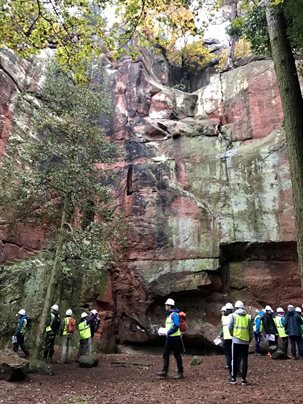 A week of fieldwork is undertaken in the Autumn Term in support of several of the modules. This involves excursions to various types of site of hydrogeological interest, and the development of field skills. In 2019/20, for example, we visited:
- a major river augmentation scheme run by the Environment Agency
- aquifer outcrop to study issues of heterogeneity
- a wetland
- a landfill site (Severn Waste)
- a water treatment site (Coal Authority)
- a slope failure site
- a karst aquifer (including a visit underground)
In addition, two days are spent working on the Campus borehole facility undertaking:
- pumping tests
- slug tests
- laboratory permeability tests
- chemical sampling
Project
Projects are chosen from a list of around 70 topics suggested by the staff and outside organisations. We are also happy to consider projects of your own devising: sometimes, for example, if you are already in employment, you may wish to undertake a project associated with the job you will return to.
Whether the project is based with an external organisation, e.g. a consultancy or a government body, or based within the University, you will be set a problem to solve, and will tackle this with guidance from supervisors from both the University and the external organisation where relevant. Projects in industry are thus purposely not placements, though in some cases the student may work at the offices of the collaborating organisation.
Projects may involve laboratory work, fieldwork, or computer work, but often a combination is required.
Most projects are applied in nature, typical of consultancy work. Others are more research-oriented. Examples of recent projects include:
-
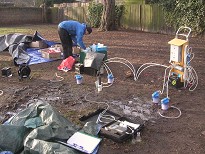 Aid work, including the investigation of the aquifer supplying the Cox's Bazar Rohingya refugee camp, Bangladesh (with Groundwater Relief & Groundwater Science, and t ravel supported by the International Association of Hydrogeologists), and groundwater resources at refugee camps in Uganda and Sudan (both with Groundwater Relief)
 - Investigation of manufactured nanoparticle movement through porous media using magnetic susceptibility and modelling (staff research)
- Developing numerical models for assessment and development of pump-and-treat remediation of a major contaminant plume (with Geosyntec)
- Developing a quantitative understanding of the groundwater flow system supplying the ecologically important Lough Gur, Ireland (with Trinity College, Dublin)
- Arsenic in groundwaters in Devon (with Groundwater Relief)
- Developing understanding of karst flow systems using tracer tests in Carboniferous Limestone, northern England (staff research)
-
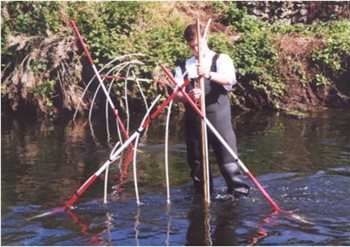 Developing understanding and models for mine impacts on groundwater systems (derogation, slope stability) in various locations including the UK, Finland, Zambia, Dominican Republic, and Ireland (with SRK, Piteau, Hafren Water, Wardell-Armstrong, Imerys)
 - Evaluating the groundwater systems supplying a major bottled water supplier (with Wood)
- Water resource and water quality assessments in English Chalk systems (with Thames Water and Affinity Water)
- Assessment of mathematical tools for mine groundwater investigation (with SRK)
- Developing models of shallow and deep groundwater systems above an environmentally monitored potential fracking site (with BGS)
- Assessing the impact of climate change on groundwater recharge in the UK and in northern Nigeria (student links)
- Designing a field nitrate removal porous medium reactor (with Stephen Buss Environmental Consulting Ltd) and investigating ferric oxide precipitation rates (Holymoor Consultancy)
-
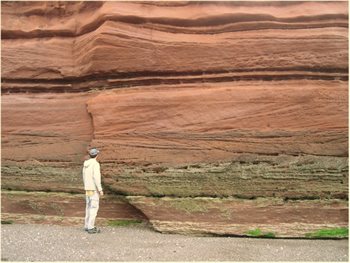 Palaeohydrogeological studies, including investigation of the potential for fresh groundwater resource development below the English Channel and the impact of sub-ice flow on saline groundwater distributions in the sandstone aquifers of Northwest England (staff research)
 - Evaluating sustainability of urban groundwater systems, particularly identifying contaminant sources geochemically; developing generic models to investigate urban aquifer sustainability; and evaluating specific cities (with University of Malaysia)
- Quantifying the biodegradation of organic contaminants at specific sites (with Geosyntec and GroundH2Oplus).
Facilities
An important facility is the MSc room, a room only used by the MSc students. Many lectures are held in this room, and it is available to you at all other times for single and group study. It is equipped with six PCs set up with both specialised and general purpose software.
In addition, extensive departmental and University facilities are available for use during the year, and especially during project work. These are summarised below:
- fieldwork facilities: We are very fortunate in having two borehole arrays on campus for use by MSc students. The arrays of boreholes are drilled into the underlying sandstone aquifer to depths of up to 60m. They are used extensively in the MSc fieldweek, and also for developing techniques during project work. We have the extensive mains, hoses, pumps, packer systems, and well-head chemistry analysis equipment required for borehole experimentation. Geophysical equipment is also available for project work (EM, GPR, seismic refraction, and resistivity imaging).
- computer facilities: The University computer clusters all have an extensive range of software installed that covers the common needs of students of all disciplines. However, the School-based PCs, both in the Earth Sciences teaching computer cluster and in the MSc room, are also equipped with specialist software packages used routinely by professional hydrogeologists. Students can install a range of software for free on their own computers during their time at the University, including the specialist groundwater professional software used in the Course (generously supplied by Stantec) as well as general purpose software including Microsoft Office, ArcGIS, and MATLAB. The University high speed BlueBEAR computing facility is available if your individual project requires high power computing. Research software developed within the School is also available.
- chemical analysis facilities: The School is well-equipped for inorganic and organic chemical analysis of field and laboratory experiment samples. Facilities include: total organic carbon analysis, gas chromatography, ICP-MS, ICP-OES, ion chromatography, stable isotope mass spectrometry, and UV/visible spectroscopy. All these, and well-head field analysis equipment, are available for use in projects.
- petrographic facilities: Facilities are also available within the School and elsewhere for geological material analysis, including thin section preparation and microscopy, a wide range of electron microscopy techniques, XRD, pore-size distribution determination, and surface area measurement.
- laboratories: Both chemical and general purpose laboratories are available for MSc projects. In addition to standard facilities, these include specialist equipment for sample saturation, permeability measurement, nanoparticle analysis, and anaerobic experimentation.
Overview
Throughout the world, the issues of water scarcity, water security, water economics, water health and sanitation, engineering, and geoenergy all rely on high-quality hydrogeology knowledge. Hence graduates with an MSc in Hydrogeology are in significant demand. In the UK, for example, Hydrogeologists are on the Tier 2 Shortage Occupation List.
Employment Record of the Course and Destinations of Graduates
The employment record for the Course is excellent. We would normally expect all students to obtain employment in the groundwater industry. Graduates take up careers mainly in groundwater or engineering consultancy companies, in the UK and abroad. Some join regulators (e.g. in England, the Environment Agency), or government scientific services (e.g. in the UK the British Geological Survey). Many take up PhD opportunities and move into research. Others obtain employment within humanitarian aid organisations or energy companies.
Graduates provide a vital role in the development, protection, and remediation of groundwater, and in the management of groundwater in engineering and energy contexts. They include many with senior industrial, academic, and governmental positions, in the UK and overseas. A number have won national and international awards for their contributions to the understanding of groundwater. Many volunteer to contribute their expertise and get involved with the Course each year.
Consultancies
Although some consultancy companies specialise, many undertake a very wide range of groundwater-related work providing consultants with interestingly varied careers. Work may involve:
- siting large public or irrigation or industrial supply wells for water supply anywhere in the world
- siting village wells in hard rock terrains in a developing country, or developing major groundwater supplies for large refugee camps
- developing catchment protection measures for vulnerable groundwater supplies like public water supplies or bottled water plants
- assessing the effects of future stresses on public or private water supplies, including the impacts of climate change
- contaminated land assessment
- designing and implementing schemes for remediation of contaminated groundwater
- designing landfill sites and associated monitoring networks
- developing regulator procedures and assessment techniques, from source protection protocols to unconventional hydrocarbon development evaluations
- designing radioactive waste disposal facilities
- assessing wetland or archaeological site vulnerability to abstraction or mining
- determining groundwater pressures and flows for engineering projects, including for tunnels, slopes, and foundations
- designing and developing mine dewatering and water supply systems
- developing mine restoration plans
- designing geothermal systems, from individual building space heating to regional electrical supplies.
The vast majority of jobs undertaken by consultants, by their nature, are far from routine, each presenting its own challenges. Many companies are multi-disciplinary, and there is often opportunity to widen further your environmental experience and skills whilst maintaining your specialist expertise.
Research Organisations
In research organisations, e.g. universities or governmental services, you may get involved in a very wide range of projects including ones in water resources in developing countries, assessing emerging contaminants, engineering, hydrocarbons, geoenergy, carbon sequestration, climate change and various types of waste disposal. In addition, groundwater skills are important for research in many geological fields, from diagenesis, mineralisation, and taphonomy, through structural geology and glacier movement, to climate change.
Regulators
In a regulator, e.g. a governmental environmental protection agency, you may find yourself becoming an expert on the hydrogeology of your region, making sure that the groundwater systems are protected for future generations or, often partly through commissioning work from consultants, developing new procedures and policies, and techniques for implementing them. This will often require detailed knowledge of local legislation.
Water Providers
Water providers, either private water companies or governmental organisations, also employ hydrogeologists who may undertake work ranging from source maintenance and protection to researching new ways of developing existing resources to designing regional or national water resource provision.
Applied Mathematics In Hydrogeology Pdf
Source: https://www.birmingham.ac.uk/postgraduate/courses/taught/gees/hydrogeology.aspx
Posted by: marcucciancessitere.blogspot.com
0 Response to "Applied Mathematics In Hydrogeology Pdf"
Post a Comment